
Finding Plymouth Residents
There is no single citywide Plymouth residents directory. The name covers many records with different dates and purposes. An address is the right opener when a parcel is the question. A name fits public court and deed indexes. A year suits family or neighborhood history. Hennepin County keeps the main property and land-title routes. Minnesota runs the voter and vital-record systems. Plymouth holds its own city and permit records. Libraries and the History Center preserve the dated material that anchors older searches.
Pick the source built for the narrow question, then keep its date beside every result. A taxpayer display does not guarantee the current occupant. A historic directory entry only speaks for its publication year. The strongest Plymouth research notes record what was found. They note where it came from and when it was created. They also flag what still needs confirmation.
- For a Plymouth address, search the county parcel index with the house number and street name, then save the parcel identifier and legal description.
- When a land record is needed, use that legal description or a party name with the Recorder's index and preserve the instrument number and recording date.
- For a lawful registration-status question, use the state voter lookup only with its required identity and address fields.
- For a former Plymouth household, compare the dated directory scan, telephone-directory finding aid, yearbook, newspaper, or History Center material.
- When an online route is incomplete, ask the named custodian for the particular record type, date span, address, parcel ID, or case number rather than requesting a broad personal file.
Plymouth Resident Records Offices
Plymouth sits inside Hennepin County. A residents directory effort draws on county land offices, the Minnesota election system, and city departments. The recorder handles recorded land documents. Property staff keep assessment and tax information. Elections staff run local election work. The state lookup carries its own eligibility and field rules. No route delivers a final answer about who lives at an address. Each supplies a lead.
For city-held material, the Plymouth clerk is the practical entry point for council, election, license, and data-practices questions. Police reports take a separate written disclosure request. The cards below mark the three routine starting points. These cover property, recorded land documents, and registration.
Hennepin Recorder / Registrar
Skyway level, room SK-0353
300 S 6th St, Minneapolis, MN 55487
612-348-5139
Hennepin Property Information
Sixth floor, A-600 Government Center
300 S 6th St, Minneapolis, MN 55487
612-348-3011
Hennepin Elections
County election administration
300 S 6th St, Minneapolis, MN 55487
612-348-5151
Plymouth PINS Resident Clues
Hennepin Property Information Search, called PINS, is the natural Plymouth address start. It is a parcel and assessment index, not a name directory. Enter the house number and street name first. Add a unit only when needed. The county asks for at least three characters in the street entry. Any direction goes at the end. PINS also accepts a 13-digit property ID. It likewise takes an addition name with optional lot and block fields. The database refreshes on weekdays at about 9:15 p.m. Central Time.
A result can yield a parcel ID, situs address, taxpayer or owner display, and mailing address. It may also show a legal description, classification, taxes, assessed values, sales information, and recent recording references. Keep situs and mailing addresses distinct. The change-taxpayer form cannot alter ownership. Neither address field proves a particular person lives there now. For the full address-led record chain, take the Plymouth street directory route.
| PINS entry | Required format | Useful Plymouth result |
|---|---|---|
| House number and street name | Both required; unit is optional | Starts the situs-address search. |
| Property ID | 13 digits; spaces and dashes accepted | Returns one identified parcel. |
| Lot, block, addition | Addition required; lot and block optional | Connects a subdivision description to a parcel. |
The official PINS address, PID, and addition search screen is the first stop for any Plymouth address lookup in the parcel system.
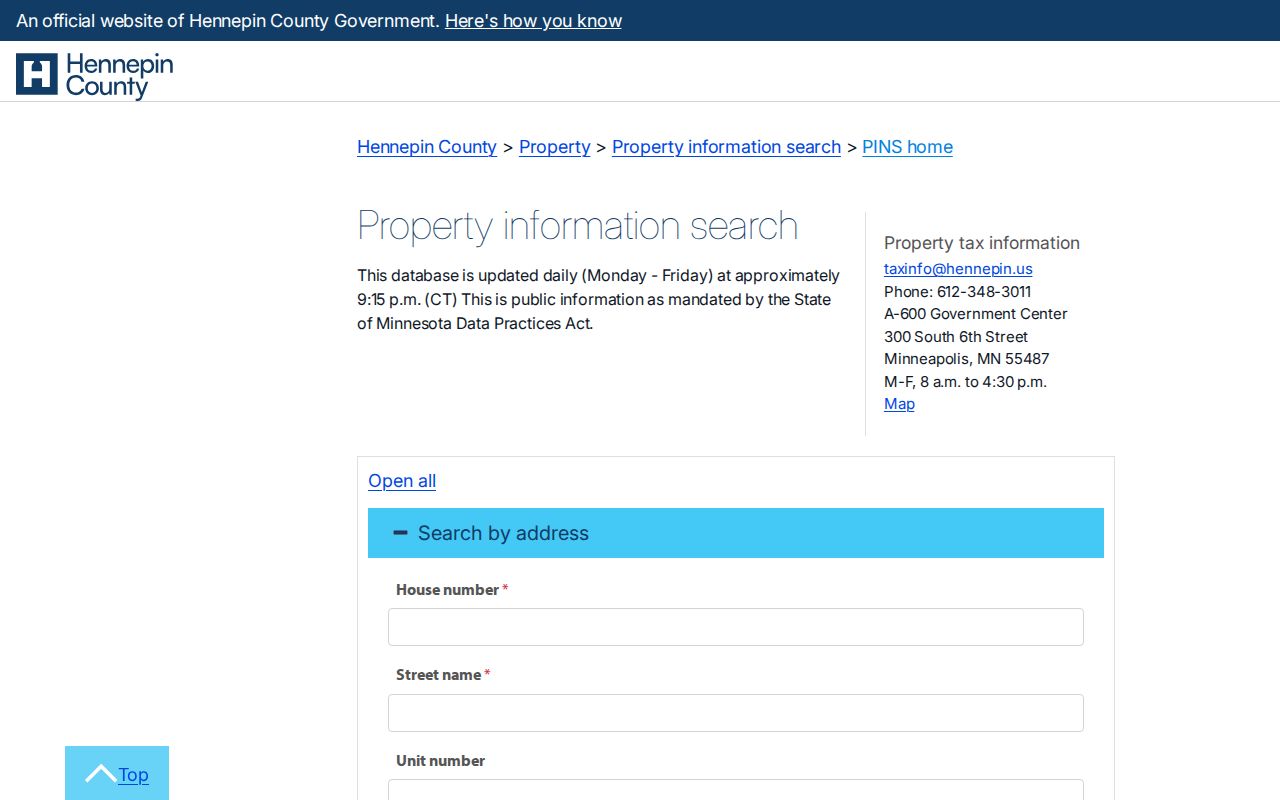
The tabs on the official screen are a reminder to pick the search mode that fits what you already know. Address, PID, and addition each ask for different inputs. PINS exposes no ZIP search field and no owner-name field in its public form.
Plymouth Parcel Geography
Address work in Plymouth gains from a second, geographic check. The city's ParcelViewer layers house numbers, businesses, zoning, lakes, building footprints, roads, city limits, and parcels. Its Query, Identify, Find, and Export Map functions situate a Plymouth address in its physical setting. The county Property Map gives a separate parcel view. Neither map is a legal boundary record. Neither proves a named person occupies a parcel.
Near a lake, city edge, or road change, compare the parcel shape against the recorded plat. Compare the road position against the survey or deed as well. A plat is the recorded subdivision map. A parcel is the tax and property unit assigned to land. The layered check matters because street names and postal labels change. The legal description persists. County Road 47 became Chankahda Trail in 2022. Both names belong in a Plymouth historical search.
- Roll
- A dated list or index created for one administrative purpose, not a permanent roster of everyone in Plymouth.
- Index
- A finding tool that points to a record. It may show fewer details than the underlying document.
- Parcel
- A defined property unit with a county identifier, address lead, and legal description.
- Criss-cross directory
- A historical directory arranged by address so an old street can be checked for dated occupants.
Plymouth Current Resident Directories
Current resident-directory work in Plymouth has to stay source-specific. PINS publishes parcel data, but its taxpayer and mailing fields do not identify an occupant. MNVotes checks one person's registration status. It does this through a controlled form. RecordEASE follows parties to recorded land documents. MCRO follows parties to public court matters. Plymouth publishes no all-resident register. Neighborhood associations are not public membership rosters.
| Plymouth source | What it can confirm | Custodian | Access boundary |
|---|---|---|---|
| Property and tax parcel | Parcel details, taxpayer or owner display, taxes, sales, and legal description | Hennepin County | Current property context, not proof of an occupant. |
| Registration lookup | Status for the individual entered with the required identity and address fields | Minnesota Secretary of State | Not a general Plymouth roster; protected data remains protected. |
| Recorded-land index | Grantor, grantee, instrument, and legal-description trail | Hennepin Recorder / Registrar | Index and document access have separate routes and fees. |
| Historical directory scan | Former address and household context for a printed year | Hennepin Library | Archival evidence, never a current-residence claim. |
Use a current record for a current question. Use a dated record for a past one. A name that matches across sources means little unless the address, date, and role also line up. That discipline keeps a Plymouth residents directory from stitching stray public mentions into an unsupported personal profile.
Plymouth Voter Registration Records
Minnesota's voter lookup verifies a registration. It is not a browseable directory. The form asks for a first name, last name, date of birth, house number, and street. Searchers then pick a mode. ZIP mode needs a ZIP code. County mode requires Hennepin County plus a Plymouth city or township selection. The street field autocompleates, and a unit field appears once the apartment option is chosen.
A result shows registration status at the moment of the search. A no-match can come from a spelling error. It can also come from a pending application, a changed address, inactive status, a ZIP or city mismatch, or a protected classification. Updates run nightly. New registrations can take up to 14 days to process.
State law handles public voter-list access separately. The request form offers defined geography and output choices. It does not offer an unrestricted current Plymouth resident list. Open the official Minnesota voter-registration lookup only when the question fits its lawful purpose.
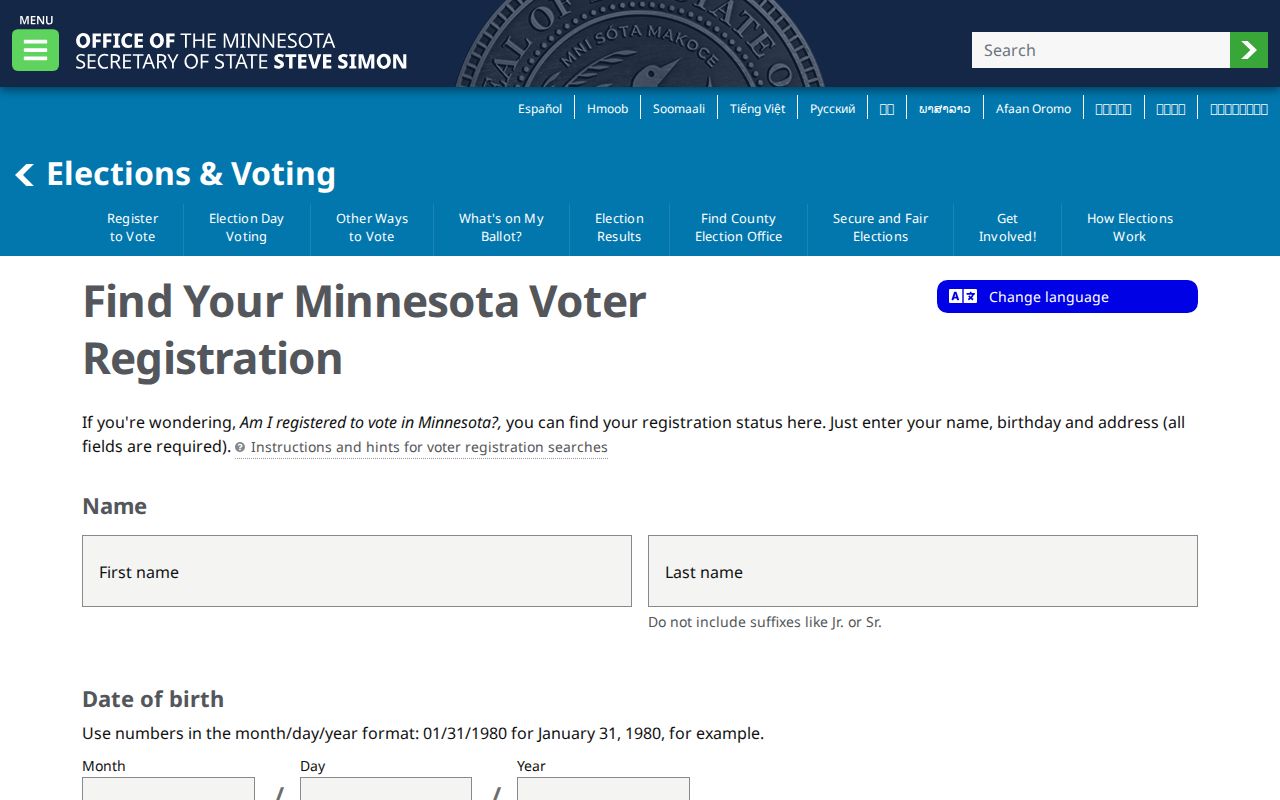
The state form shows why a name alone falls short on this Plymouth record route. It expects a matched set of personal and address fields before returning registration guidance.
Plymouth Deed Index Trails
Recorded land documents answer a different Plymouth question: who conveyed, received, financed, released, or otherwise appeared in the title record for a parcel. Hennepin runs both Torrens and abstract land-title systems. A Torrens parcel carries a certificate of title. An abstract parcel does not. In either system, the legal description beats the street address for tracing a chain of title.
RecordEASE is the county's public search route for deeds, mortgages, assignments, liens, releases, certificates, and plats. An email request comes first. The county then provides public-search credentials. Its landing information limits recent online recording history to five years, and the earliest searchable index date is not stated. Older Plymouth work can continue through the Recorder's public kiosks, a one-time research request, or the Pro access path, where documents, certificates, and plats list at $2.50 per item.
View the RecordEASE public-search entry screen before requesting access.
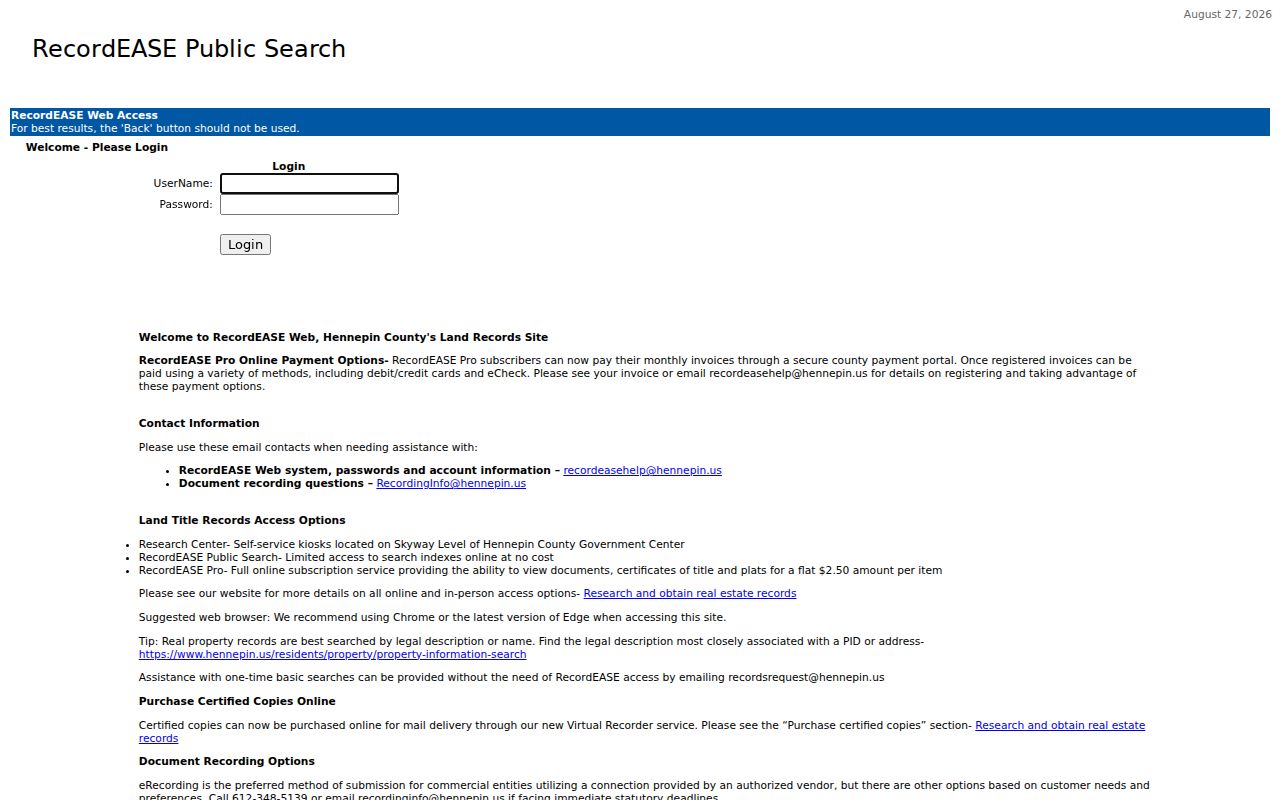
That login gate matters for a Plymouth deed lead. The county's credential, kiosk, email, or paid document route may come before the underlying record can be reviewed.
Plymouth Court Record Limits
For public court questions, Minnesota Court Records Online, or MCRO, offers four search tabs. They are Case, Document, Hearing, and Judgment. Depending on the tab, the guide supports a person or business name. Case number, citation, attorney name or bar number, county, date, and case-type filters are also options. Exact, sounds-like, and wildcard searching help with a Plymouth name variation. Record the spelling, filters, and search date with any result.
MCRO does not return every case by name. Pending criminal matters stay hidden by defendant name until conviction. Sealed, juvenile, confidential, and other nonpublic material is absent or restricted. The Hennepin Records Center serves the public from room SK-0260, 300 S 6th St, Minneapolis. Terminals are available on weekdays from 8:00 a.m. to 4:30 p.m. It also handles mail requests. Plain copies carry no stated fee. Certified copies cost $14. A judgment search lists at $5 per name searched or certified.
Use the official MCRO search interface for public case-index work. Then contact the Hennepin Records Center for the custodian route.
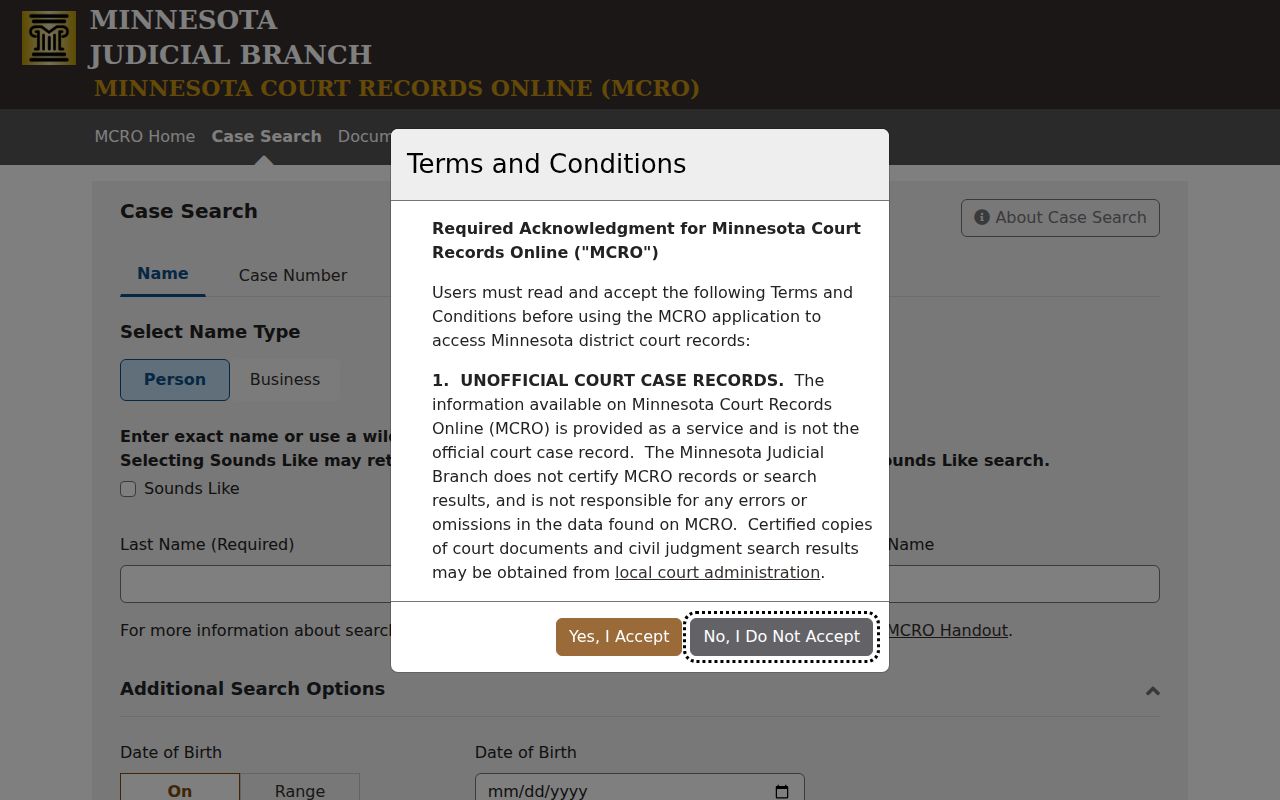
The separate tabs on the MCRO interface mark distinct search paths. That separation helps avoid treating one name search as a complete Plymouth court history.
The official Hennepin County Jail Roster address exists as the custodian's roster route. Its server was unavailable for review.
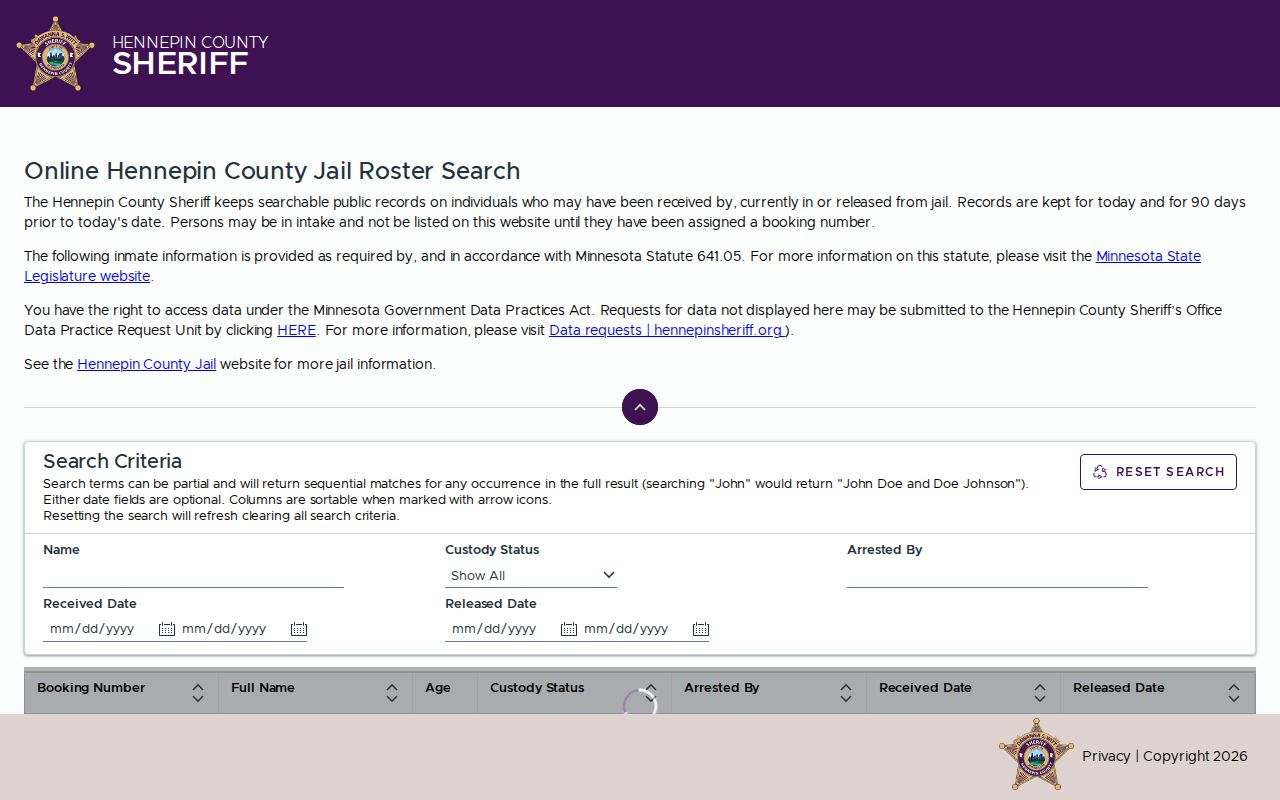
Because the roster stayed out of reach, nothing here claims its fields, booking window, charge history, release details, or image policy. Those specifics belong to the official custodian. Contact the jail directly when the service is reachable.
Plymouth Vital Record Routes
Birth, death, marriage, and divorce records prove events, not current Plymouth addresses. The Minnesota Department of Health is the statewide route for births from 1900 forward. Deaths run from 1908 forward. Earlier events generally go to the county where they occurred. Certified birth access turns on the requester's relationship or legal authority. Identification and the form's notarization or verification process also matter. The state accepts no emailed applications. It sends no certificates electronically.
Noncertified death information is generally public. The form and data-practices rules still govern record details. The Minnesota Official Marriage System is a public index lead, not the certificate. Search it by county, applicant name, date range, and match mode. Order the certificate from the county that issued the license. A Plymouth divorce decree stays with the district court that granted it.
These records work best alongside a dated property, directory, or archival source. That source must be lawfully accessible. The Minnesota Department of Health vital-record route and Minnesota Official Marriage System keep event research with the correct custodian.
Plymouth License Record Leads
License and business records serve a narrow purpose in Plymouth research. They confirm a role, an issuing agency, or a dated business connection. They do not prove where someone lives at home. Minnesota eLicense routes searches by topic, agency, name, or keyword. It spans 942 licenses, permits, registrations, and certifications across 47 agencies. Because each agency runs its own system, result fields, dates, and status labels vary widely.
Treat a license hit as one piece of a Plymouth research note. Note the agency and the capture date beside it. DLI boards, health-facility systems, and the Secretary of State each follow their own update cycles. A license address or registered-agent listing is role-based. It is not a residents-directory entry. The Minnesota eLicense routing page displays the agency and topic path. That path appears before any specialized search begins.
The image shows a gateway page, not a statewide result list. Plymouth credential work must continue with the specific board or agency that keeps the underlying record.
Plymouth ZIP Record Checks
Minnesota publishes an official county and ZIP reference. It lists four Plymouth ZIP codes: 55441, 55442, 55446, and 55447. The state table confirms a city-county association. It does not map ZIPs to neighborhoods, draw street-level boundaries, or identify a resident. USPS delivery geography can cross a municipal edge. A ZIP alone therefore cannot place an address inside Plymouth city limits.
For a specific address, keep the city, state, and ZIP exactly as printed. Then compare the delivery label against the county parcel layer and the city-limit layer. Historical records may carry a postal city name. Some show an old road number that differs from present practice. Keep a clean trail: original address text, USPS result, and parcel identifier. Add the city-limit position and the historical directory heading. Store each as its own field rather than forcing them into one label.
Note: Plymouth publishes no ZIP-filtered parcel portal or ZIP-to-neighborhood map.
Plymouth Family History Sources
Family, school, neighborhood, and address history in Plymouth has a strong local route. It sits outside current government indexes. The Plymouth History Center occupies the former 1885 Old Town Hall. Its shelves hold old newspapers, yearbooks, documents, photographs, and oral histories. A visitor can place people, organizations, and places in their era without a modern roster ever being published. The listed schedule is Tuesday, Thursday, and the first Saturday. Hours are generally 11:00 a.m. to 2:00 p.m.; confirm access before travel.
Hennepin Library Special Collections adds directories, maps, yearbooks, newspaper clippings, census material, and library-only databases. Plymouth Library works as a local access point. The deeper local-history holdings live at Special Collections and at the History Center. These repositories shine when a Plymouth address turns up in a newspaper, school source, or community record yet is absent from a current web portal.
The Plymouth History Center's local-history information covers the city collection and its current access details.
Plymouth Historical Resident Directories
The best digitized Plymouth residents-directory lead is Hennepin Library's New Hope-Plymouth-Wayzata collection. It covers 1964 through 1983. The grouping is a publisher label, not proof of one municipality. Search by name or address. Verify the city heading on the page. Save the scan title, year, page, and printed address. OCR routinely misreads names and numbers. The image itself is the record to cite.
Directory entries can list an address, a spouse notation, an occupation, and a business listing. Entries also carry markers like h, r, or b. Marker meanings shift by year. Some even run into the street number. Hennepin's telephone-directory finding aid also lists Plymouth volumes from 1960 through 1970, including yellow-only years. Directory runs can have gaps. Yearbooks, local newspapers, plat books, and History Center oral histories supply companion dates. Browse the digitized New Hope-Plymouth-Wayzata directory collection. Then use the Plymouth Directory Book for the full scan-reading and household-tracing method.
Plymouth Verification Practices
Sound Plymouth residents-directory work favors two independent, dated sources. One loose match is never enough. A PINS parcel card pairs with a recorded instrument. Together they support a property trail. A directory scan pairs with a yearbook or newspaper. That supports a historical connection. A court or vital record must stay in the category that created it. Record the source URL, record date, fields searched, access limits, and any ambiguity. Resist turning a lead into a broad claim.
Plymouth's 2026 permit-scam warning shows why official-looking material deserves a direct check. Scammers drew on public permit, zoning, and property context. They used it to impersonate planning officials and demand money. Verify any fee through the city's published main line. Never use a contact supplied in a message. Public records suit lawful personal research, family history, estate questions, property curiosity, and civic transparency. They must never be used to stalk, harass, or harm someone.
| Research approach | What it preserves | What to check next |
|---|---|---|
| Official index or record | Custodian, date, fields, and stated access class | Underlying image, copy, or a second dated source. |
| Historical scan or map | Publication year, page, heading, and printed text | Visual scan review and a parcel, deed, or archive comparison. |
| Commercial people-search category | At most an unverified lead | Replace it with the named government, library, or archive custodian. |
When a portal fails, write down the address tried, the date, and the error state. Then call, email, visit the public terminal, or send a targeted record request to the custodian. That habit preserves the gap without guessing what an unavailable Plymouth source might contain.