
Finding Plymouth Residents
A Plymouth residents directory is not one citywide list. It is a set of records with different dates and purposes. Start with an address when the question concerns a parcel, a name when the question concerns a public court or deed index, and a year when family or neighborhood history is the goal. Hennepin County keeps the primary property and land-title routes. Minnesota runs voter and vital-record systems. Plymouth holds its own city and permit records, while libraries and the History Center preserve dated material.
Choose the source that can answer the narrow question, then keep the source date beside the result. A taxpayer display is not automatically a current occupant, and a historic directory entry only speaks for its publication year. The best Plymouth research notes say what was found, where it came from, when it was created, and what still needs confirmation.
- For a Plymouth address, search the county parcel index with the house number and street name, then save the parcel identifier and legal description.
- When a land record is needed, use that legal description or a party name with the Recorder's index and preserve the instrument number and recording date.
- For a lawful registration-status question, use the state voter lookup only with its required identity and address fields.
- For a former Plymouth household, compare the dated directory scan, telephone-directory finding aid, yearbook, newspaper, or History Center material.
- When an online route is incomplete, ask the named custodian for the particular record type, date span, address, parcel ID, or case number rather than requesting a broad personal file.
Plymouth Resident Records Offices
Plymouth sits in Hennepin County, so the records most useful for a residents directory are split among county land offices, the Minnesota election system, and city departments. The recorder follows recorded land documents. Property staff maintain assessment and tax information. Elections staff administer local election work, while the state lookup has its own eligibility and field rules. Each route supplies a lead, not a single final answer about who is present at an address.
For city-held material, Plymouth's clerk is the practical entry for council, election, license, and data-practices questions. Police reports use a separate written disclosure request. The cards below identify the three routine starting points for property, recorded land documents, and registration questions.
Hennepin Recorder / Registrar
Skyway level, room SK-0353
300 S 6th St, Minneapolis, MN 55487
612-348-5139
Hennepin Property Information
Sixth floor, A-600 Government Center
300 S 6th St, Minneapolis, MN 55487
612-348-3011
Hennepin Elections
County election administration
300 S 6th St, Minneapolis, MN 55487
612-348-5151
Plymouth PINS Resident Clues
Hennepin Property Information Search, known as PINS, is the practical Plymouth address start. It is a parcel and assessment index, not a name directory. Enter a house number and street name first, adding a unit only when needed. The county says the street entry should use at least three characters and put any direction at the end. PINS also accepts a 13-digit property ID, or an addition name with optional lot and block fields. The database is updated on weekdays at about 9:15 p.m. Central Time.
A PINS result can supply a parcel ID, situs address, taxpayer or owner display, mailing address, legal description, classification, taxes, assessed values, sales information, and recent recording references. Keep the distinction between situs and mailing address. The change-taxpayer form cannot change ownership, and neither address field proves that a particular person currently lives there. For the full address-led record chain, use the Plymouth street directory route.
| PINS entry | Required format | Useful Plymouth result |
|---|---|---|
| House number and street name | Both required; unit is optional | Starts the situs-address search. |
| Property ID | 13 digits; spaces and dashes accepted | Returns one identified parcel. |
| Lot, block, addition | Addition required; lot and block optional | Connects a subdivision description to a parcel. |
See the official PINS address, PID, and addition search screen before entering a Plymouth address.
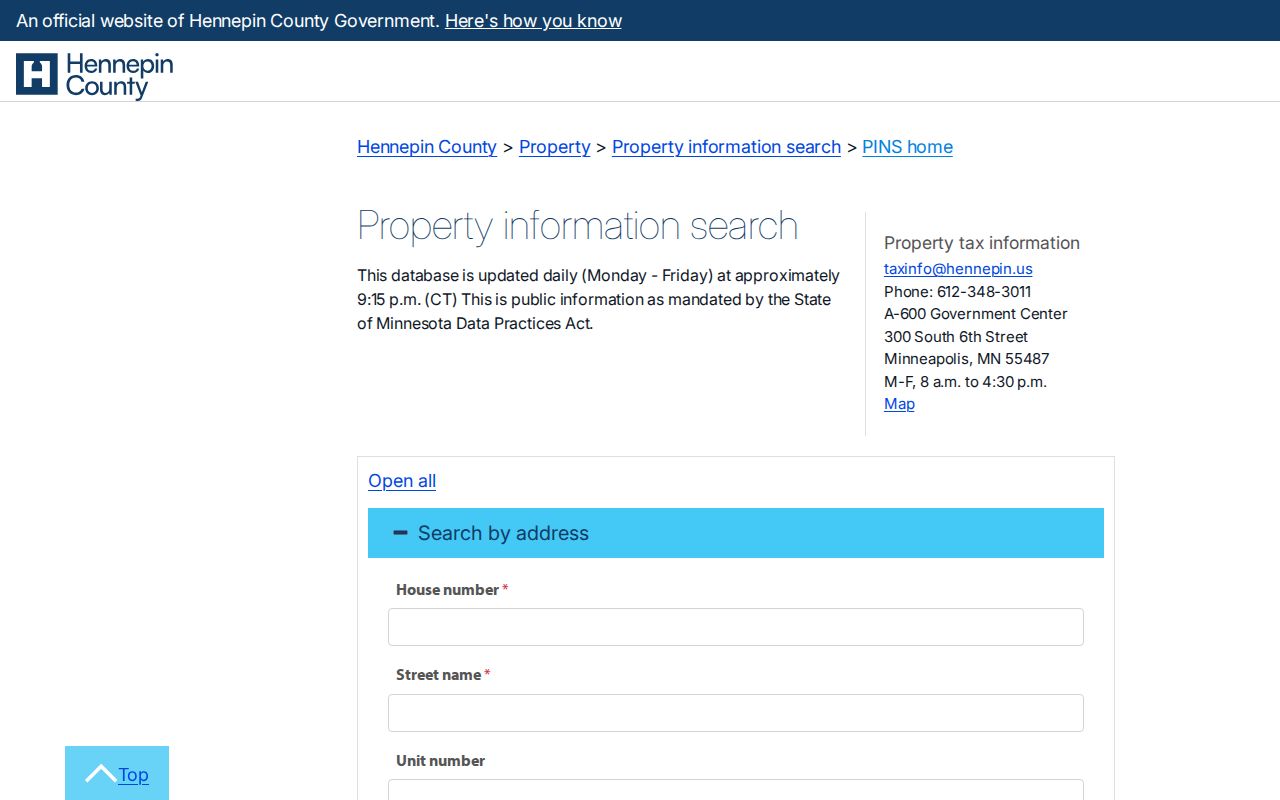
The tabs shown in the capture reinforce the need to choose the search mode that matches the information already known. PINS does not expose a ZIP search field or an owner-name field in its inspected public form.
Plymouth Parcel Geography
Plymouth's address work benefits from a second, geographic check. The city's ParcelViewer has layers for house numbers, businesses, zoning, lakes, building footprints, roads, city limits, and parcels. Its Query, Identify, Find, and Export Map functions help place a Plymouth address in its physical setting. The county Property Map offers a separate parcel view. Neither map is a legal boundary record or proof that a named person occupies a parcel.
For a Plymouth location near a lake, city edge, or road change, compare the parcel shape and road position to the recorded plat, survey, or deed. A plat is the recorded subdivision map; a parcel is the tax and property unit assigned to land. This layered check matters because street names and postal labels can change while the legal description persists. County Road 47 became Chankahda Trail in 2022, so both terms belong in a Plymouth historical search.
- Roll
- A dated list or index created for one administrative purpose, not a permanent roster of everyone in Plymouth.
- Index
- A finding tool that points to a record. It may show fewer details than the underlying document.
- Parcel
- A defined property unit with a county identifier, address lead, and legal description.
- Criss-cross directory
- A historical directory arranged by address so an old street can be checked for dated occupants.
Plymouth Current Resident Directories
Current Plymouth resident-directory work has to stay source-specific. PINS offers public parcel data, but its taxpayer and mailing fields are not an occupant finding. MNVotes checks an individual's registration status through a controlled form. RecordEASE follows parties to recorded land documents, while MCRO follows parties to public court matters. Plymouth does not publish an all-resident register, and neighborhood associations do not serve as public membership rosters.
| Plymouth source | What it can confirm | Custodian | Access boundary |
|---|---|---|---|
| Property and tax parcel | Parcel details, taxpayer or owner display, taxes, sales, and legal description | Hennepin County | Current property context, not proof of an occupant. |
| Registration lookup | Status for the individual entered with the required identity and address fields | Minnesota Secretary of State | Not a general Plymouth roster; protected data remains protected. |
| Recorded-land index | Grantor, grantee, instrument, and legal-description trail | Hennepin Recorder / Registrar | Index and document access have separate routes and fees. |
| Historical directory scan | Former address and household context for a printed year | Hennepin Library | Archival evidence, never a current-residence claim. |
Use a current record for a current question and a dated record for a past one. A matching name across sources is only useful when the address, date, and role match as well. This distinction keeps a Plymouth residents directory from turning disconnected public mentions into an unsupported personal profile.
Plymouth Voter Registration Records
Minnesota's voter lookup is an identity-and-address registration check, not a browseable directory. Its form requires first name, last name, date of birth, house number, and street. The searcher then chooses ZIP mode or county mode. ZIP mode requires a ZIP. County mode requires Hennepin County and the Plymouth city or township selection. The street field uses autocomplete, and a unit field appears when the apartment or unit option is selected.
A result reflects the registration status at the time searched. A no-match can result from spelling, a pending application, a changed address, inactive status, a ZIP or city mismatch, or a protected classification. The system updates nightly, and new registrations can take up to 14 days to process. Minnesota law controls public voter-list access separately. The request form offers defined geography and output choices, rather than an unrestricted current Plymouth resident list.
Open the official Minnesota voter-registration lookup only when the question fits that system's lawful purpose.
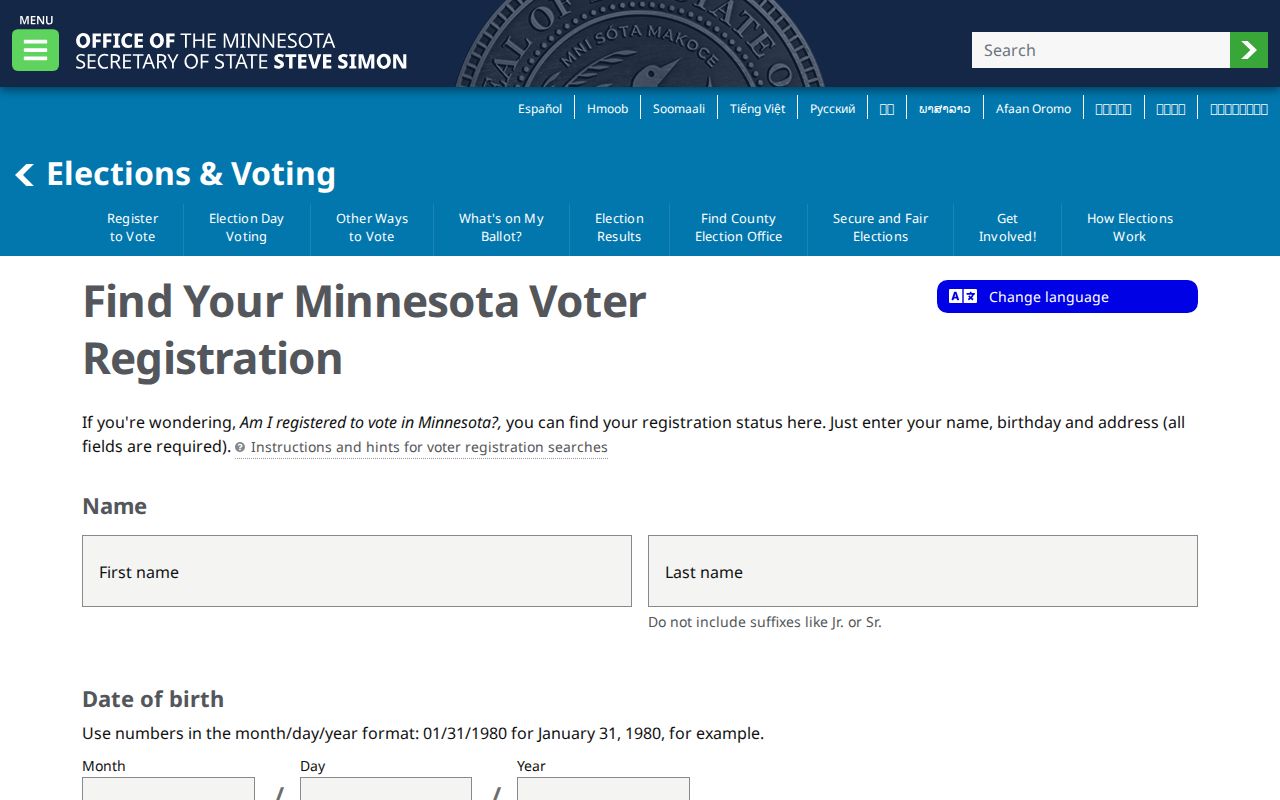
The capture shows why a name alone is insufficient for this Plymouth record route. The form expects a matched set of personal and address fields before it can return registration guidance.
Plymouth Deed Index Trails
Recorded land documents answer a different Plymouth question: who conveyed, received, financed, released, or otherwise appeared in the title record for a parcel. Hennepin uses both Torrens and abstract land-title systems. A Torrens parcel has a certificate of title; an abstract parcel does not. In either system, the legal description is more reliable than the street address for a chain of title.
RecordEASE is Hennepin's public search route for deeds, mortgages, assignments, liens, releases, certificates, and plats. The county asks for an email request before providing public-search credentials. Its landing information says recent online recording history is limited to five years, while the earliest searchable index date is not stated. Older Plymouth work can continue through the Recorder's public kiosks, a one-time research request, or the Pro access path, where documents, certificates, and plats are listed at $2.50 per item.
View the RecordEASE public-search entry screen before requesting access.
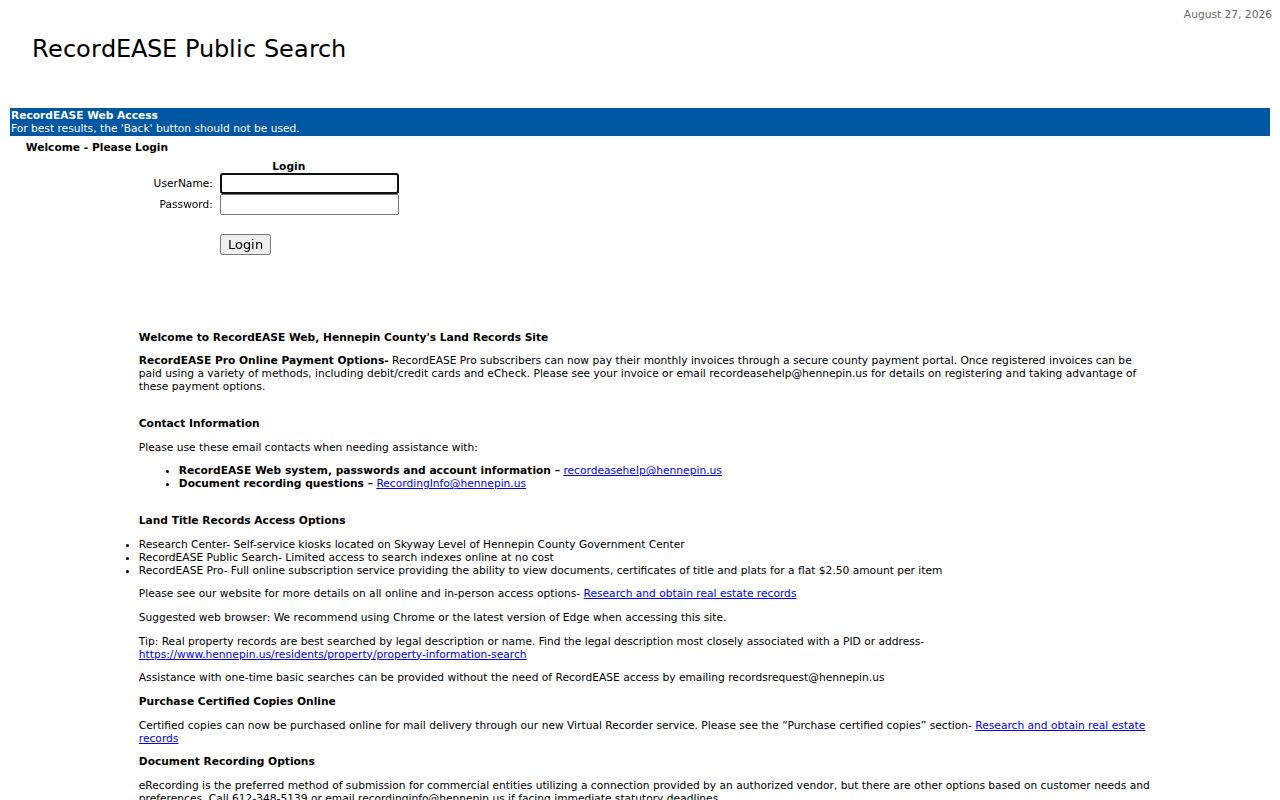
The captured login gate is important context: a Plymouth deed lead may require the county's credential, kiosk, email, or paid document route before the underlying record can be reviewed.
Plymouth Court Record Limits
For a public court question, Minnesota Court Records Online, or MCRO, has Case, Document, Hearing, and Judgment search tabs. Depending on the tab, its guide supports a person or business name, case number, citation, attorney name or bar number, county, date, and case-type filters. Exact, sounds-like, and wildcard searching can help with a Plymouth name variation. Record the spelling, filters, and search date with any result.
MCRO does not return every case by name. Pending criminal matters do not appear by defendant name until conviction, and sealed, juvenile, confidential, and other nonpublic material is absent or restricted. The Hennepin Records Center has public terminals and handles mail requests at room SK-0260, 300 S 6th St, Minneapolis, from 8:00 a.m. to 4:30 p.m. on weekdays. Plain copies have no stated fee; certified copies cost $14, and a judgment search is listed at $5 per name searched or certified.
Use the official MCRO search interface for public case-index work, then contact the Hennepin Records Center for the custodian route.
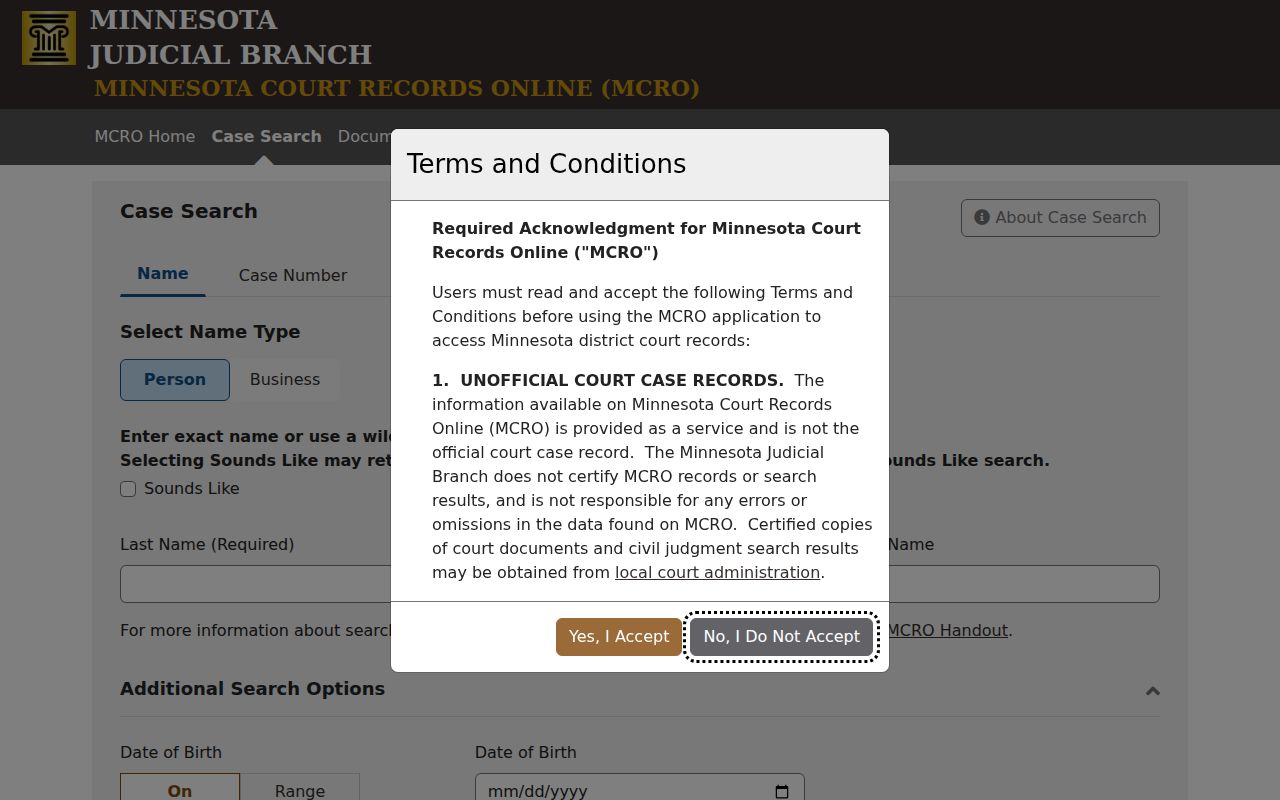
The tabs in the MCRO capture show separate search paths, which helps avoid treating a single name search as a complete Plymouth court history.
The official Hennepin County Jail Roster address was also captured during research, but its server was unavailable for inspection.
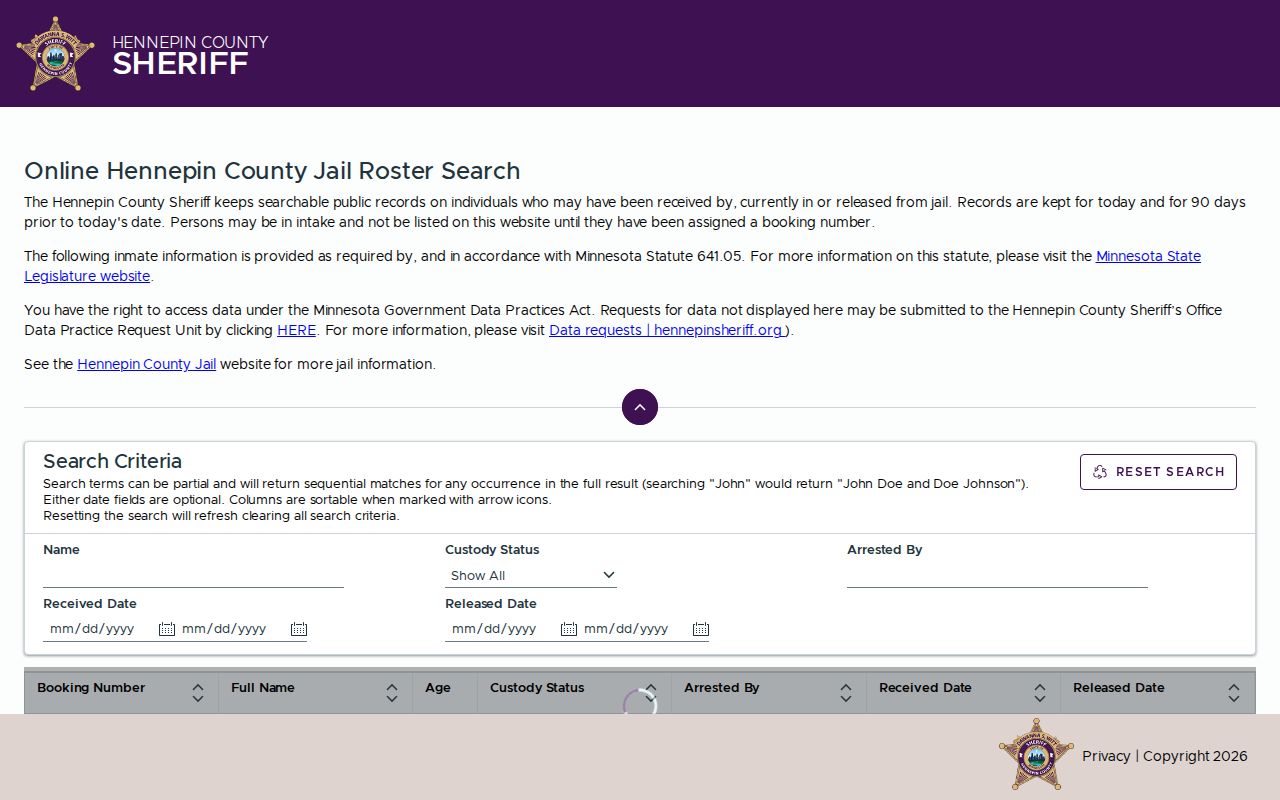
Because the roster could not be inspected, no Plymouth jail-search fields, booking window, charge history, release details, or image policy should be claimed from it. Use the official custodian when the service is reachable.
Plymouth Vital Record Routes
Birth, death, marriage, and divorce records provide event evidence, not proof of a current Plymouth address. Minnesota Department of Health is the statewide route for births from 1900 forward and deaths from 1908 forward; earlier events generally go to the county where the event occurred. Certified birth access depends on the requester's relationship or legal authority, identification, and the form's notarization or verification process. The state does not accept emailed applications or send certificates electronically.
Noncertified death information is generally public, but the form and data-practices rules still govern record details. The Minnesota Official Marriage System is a public index lead, not the certificate. Search it by county, applicant name, date range, and match mode, then order a certificate from the county that issued the license. A Plymouth divorce decree belongs with the district court that granted it. These records work best when paired with a dated property, directory, or archival source that is lawfully accessible.
The Minnesota Department of Health vital-record route and Minnesota Official Marriage System keep event research with the correct custodian.
Plymouth License Record Leads
Public organizational and credential records can verify a role, an issuing agency, or a dated business connection in Plymouth. They do not establish someone's private residence. Minnesota eLicense directs users by topic, agency, name, or keyword across 942 licenses, permits, registrations, and certifications handled by 47 agencies. Result fields, dates, and status labels differ by the agency that issued the credential.
Use a license or business result as one piece of a Plymouth research note, then state the agency and capture date. DLI, professional-board, health-facility, and Secretary of State systems have their own update cycles and search methods. A license address or registered-agent listing is a role-based record, not a basis for a residents directory entry.
The Minnesota eLicense routing page shows the agency and topic path available before a specialized search is chosen.
The page pictured here is a gateway rather than a single statewide result list. Plymouth credential research has to continue with the specific board or agency that maintains the underlying record.
Plymouth ZIP Record Checks
Minnesota's official county and ZIP reference lists four Plymouth ZIP codes: 55441, 55442, 55446, and 55447. That state table confirms a city and county association, but it does not assign these ZIPs to neighborhoods, give a street-by-street boundary, or identify a resident. USPS delivery geography can cross a municipal edge, so a ZIP alone cannot establish that a location falls inside Plymouth city limits.
For a specific address, retain the city, state, and ZIP exactly as printed, then check the delivery label against the parcel and city-limit layers. Historical material may carry a postal city name or a road number that differs from present practice. The useful research trail is original address text, USPS result, county parcel identifier, city-limit position, and the historical directory heading, each kept as a separate field rather than forced into one label.
Note: No official Plymouth ZIP-filtered parcel portal or ZIP-to-neighborhood map was located during research.
Plymouth Family History Sources
For family, school, neighborhood, or address history, Plymouth has a particularly useful local route outside current government indexes. The Plymouth History Center occupies the former 1885 Old Town Hall and keeps old newspapers, yearbooks, documents, photographs, and oral histories. Its research room gives a lawful way to place people, organizations, and places in their time without publishing a modern roster. The listed schedule is Tuesday, Thursday, and the first Saturday, generally 11:00 a.m. to 2:00 p.m.; confirm access before travel.
Hennepin Library Special Collections adds directories, maps, yearbooks, newspaper clippings, census material, and library-only databases. Plymouth Library is a useful local access point, but deeper local-history holdings are centered at Special Collections and the History Center. These repositories are especially helpful when a Plymouth address appears in a newspaper, school source, or community record but is absent from a current web portal.
Consult the Plymouth History Center's local-history information for the city collection and its current access details.
Plymouth Historical Resident Directories
The strongest digitized Plymouth residents-directory lead is Hennepin Library's New Hope-Plymouth-Wayzata collection, which covers 1964 through 1983. The grouping is an archival and publisher label, not proof that the three cities were a single municipality. Search the collection by name or address, verify the city heading, and save the scan title, year, page, and printed address. OCR can misread names and numbers, so the image itself is the record to cite.
Directory entries can contain an address, spouse notation, occupation or affiliation, business listing, and markers such as h, r, or b. Their meaning varies by year, and a marker can run into the street number. Hennepin's telephone-directory finding aid also lists Plymouth volumes from 1960 through 1970, including yellow-only years. Yearbooks, local newspapers, plat books, and History Center oral histories provide companion dates when a directory run has a gap.
Browse the digitized New Hope-Plymouth-Wayzata directory collection, then use the Plymouth Directory Book for the complete scan-reading and household-tracing method.
Plymouth Verification Practices
Good Plymouth residents-directory research gives more weight to two independent, dated sources than to a single loose match. A PINS parcel card plus a recorded instrument can support a property trail. A directory scan plus a yearbook or newspaper can support a historical connection. A court or vital record must remain in the category that created it. Preserve the source URL, record date, fields searched, access limit, and any ambiguity instead of converting a lead into a broad claim.
Plymouth's 2026 permit-scam warning also shows why official-looking information needs a direct check. Scammers used public permit, zoning, and property context to impersonate planning officials and demand money. Verify any fee or request through the city's published main line, not a contact supplied in a message. Public records are appropriate for lawful personal research, family history, estate questions, property curiosity, and civic transparency. They must never be used to stalk, harass, or harm someone.
| Research approach | What it preserves | What to check next |
|---|---|---|
| Official index or record | Custodian, date, fields, and stated access class | Underlying image, copy, or a second dated source. |
| Historical scan or map | Publication year, page, heading, and printed text | Visual scan review and a parcel, deed, or archive comparison. |
| Commercial people-search category | At most an unverified lead | Replace it with the named government, library, or archive custodian. |
When a portal fails, record the attempted address, date, and error state, then call, email, visit the public terminal, or submit a targeted record request to the custodian. That approach preserves the gap without guessing what an unavailable Plymouth source might contain.